

Rockefeller's Original Operating System
How the world's first billionaire created systematic business practices in the 1870s — the foundation for modern operating systems like Scaling Up and OKRs.

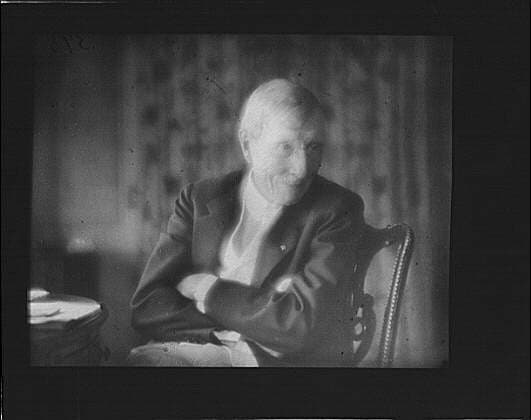
Picture this: It's 1870. No computers. No smartphones. No Zoom meetings. Yet in Cleveland, Ohio, a 31-year-old entrepreneur is quietly revolutionizing how businesses operate. His name? John D. Rockefeller.
While his competitors were running chaotic, personality-driven operations, Rockefeller was building something entirely different: the world's first systematic business operating system.
Sound familiar? It should. Because the same principles Rockefeller used to build Standard Oil—and become history's wealthiest person—are exactly what powers today's best business operating systems.
The Chaos Before the System
In the 1870s, the oil industry was pure pandemonium. Companies dumped 40% of their oil as waste. Prices fluctuated wildly. Quality was inconsistent. Business owners worked in their businesses, not on them.
Rockefeller saw this chaos and thought: "There has to be a better way."
He was right. And his solution would become the blueprint for every business operating system that followed—from EOS to Scaling Up to OKRs.
Rockefeller's Revolutionary "Operating System"
1. Systematic Meeting Rhythms
While competitors ran businesses through hallway conversations and crisis management, Rockefeller instituted regular, structured meetings with clear agendas and accountability.
Sound familiar? This is the exact foundation of the structured weekly leadership meetings used in frameworks like EOS, Scaling Up, and 4DX—same time every week, structured agenda, issues resolution.
Rockefeller's Rule: "A business meeting should have a clear purpose, defined outcomes, and specific next steps."
2. Obsessive Focus on Efficiency
Rockefeller was obsessed with metrics and waste elimination. While competitors accepted 60% efficiency as "good enough," Rockefeller tracked every barrel, every process, every dollar.
He famously said: "I believe in the principle of details. It is the attention to little things that makes the big things work."
Today's Translation: Weekly scorecards with 5-15 key metrics that tell you exactly where your business stands—a practice now standard across EOS, Scaling Up, and other frameworks.
3. Quality Standardization (Process Documentation, Anyone?)
Here's what made Rockefeller truly revolutionary: He created Standard Oil not just as a company name, but as a promise of consistent quality. Every barrel of kerosene had identical properties and predictable performance.
How? Documented, repeatable processes that anyone could follow.
Modern Connection: This is why process documentation is a core component of every business operating system. Consistent results require consistent systems.
4. Strategic Integration (The Ultimate Connected System)
While competitors focused on single aspects of their business, Rockefeller built an integrated system. He owned pipelines, terminals, refineries, and distribution—all connected and working together.
GoalCadence Connection: Just like Rockefeller's integrated approach, GoalCadence connects all your business operating system components automatically. Update your quarterly goal progress? It reflects in your Scorecard. Resolve an issue? It updates everywhere it's connected.
5. People Development
Rockefeller didn't just hire employees—he developed leaders. His famous quote: "Good leadership consists in showing average people how to do the work of superior people."
Modern DNA: This is the heart of every people framework in business operating systems—getting the right people in the right roles and developing them systematically.
The Numbers Don't Lie
Rockefeller's systematic approach delivered results that seem impossible today:
- 90% market share at Standard Oil's peak
- $400 billion net worth (in today's dollars)
- 40+ companies running like clockwork under one system
- Decades of consistent growth through multiple economic cycles
But here's the kicker: It wasn't genius. It was system.
The Modern Entrepreneur's Dilemma
Fast-forward 150 years. Entrepreneurs today face the exact same chaos Rockefeller conquered:
- ❌ Inconsistent processes
- ❌ Poor communication
- ❌ Lack of accountability
- ❌ No clear metrics
- ❌ Disconnected tools and data
The difference? Today's solution is accessible to every business, not just those who can afford expensive consultants.
What Rockefeller Would Say About Modern Business Operating Systems
If Rockefeller could see today's business frameworks, he'd probably say: "Finally! Someone gets it."
Because modern operating systems take his systematic approach and make it accessible to every business, not just industrial giants.
Rockefeller's Principles → Modern Tools:
- ✅ Regular meeting rhythms → Structured weekly leadership meetings
- ✅ Metrics-driven decisions → Weekly scorecards and KPI dashboards
- ✅ Clear accountability → Quarterly goals with single owners
- ✅ Process standardization → Documented processes
- ✅ Integrated systems → Connected dashboard
The Rockefeller Test for Your Business
Ask yourself the same questions Rockefeller asked in 1870:
- "Could my business run without me for 30 days?"
- "Do we have consistent, measurable processes?"
- "Does everyone know exactly what success looks like this quarter?"
- "Are our meetings driving results or just consuming time?"
If you answered "no" to any of these, you're facing the exact same challenges that Rockefeller solved 150 years ago.
Your Rockefeller Moment
Here's the truth: Every great business runs on systems, not personalities.
Rockefeller proved it in 1870. Companies running structured operating systems prove it every day. And now it's your turn.
The question isn't whether systematic business operations work—Rockefeller answered that 150 years ago.
The question is: Are you ready to build your business on the shoulders of a giant?
Ready to implement Rockefeller's systematic approach in your business? See how GoalCadence brings together all these proven methodologies in one interconnected system—the same principles that built the world's greatest fortune, now accessible to growing businesses everywhere.
Coming Next Week: "Verne Harnish: Scaling Up the Rockefeller Way" - Discover how one man bridged Rockefeller's 1870s principles with modern business scaling.